
Slowpokes No More
- tonileebeaton
- Mar 17, 2022
- 9 min read

After an exhilarating passage from San Juan, Puerto Rico, we find ourselves safely nestled above the Greater Antilles islands in the Bahamas. What a trip!
Day 1 (Tuesday, March 8th): Customs and immigration having already been taken care of yesterday (for both Puerto Rico departure and Bahamas arrival), we planned on an easy and relaxed morning. Initially we hoped to pull anchor by noon, but last-minute errands kept us in the anchorage until 2:45 PM. No problem there, as the sea states were only supposed to improve the longer the afternoon wore on. Our one big boat chore – filling up our approx. 500L of freshwater onboard – was squashed when we discovered that the entire city of San Juan had no water. Figures, right?! With about 60L of drinking water aboard, we weren’t too concerned… after all, the heavy water-using activities like doing dishes and showering on a passage are not a priority! After pulling anchor and about 10 pounds of mud along with it, we used the 1.6nm (nautical mile) harbour channel to set up our spinnaker pole (used to flatten our headsail when sailing downwind) as well as hoist the dinghy aboard the foredeck, and raise the mainsail. By 3:30 PM

we were out of San Juan harbour making our way northwest to the Bahamas. It took us a hot minute to get comfortable with the sea state, as waves were reaching upwards of 3.0 meters; however, having these waves on the stern was significantly better than on the beam or bow. One of the huge perks of downwind sailing is following seas – the boat careens down the big swells in a surfing motion that actually adds a significant amount of speed to our SOG (speed over ground). Fishing lines were put in, and around 7:00 PM Paul hooked the fish that got away… including the entire lure and hook! He thinks it must’ve been a tuna or wahoo. Our overnight speeds reached 8.2 knots even with a reefed mainsail and a furled headsail, and we never fell below 6.0 knots. For sailors who plan their trips with an average speed of 4.0 knots per hour, we were both flabbergasted and thrilled at our speediness! The bioluminescence in the water once the moon set made our overnight sail both beautiful and serene.
Day 2 (Wednesday, March 9th): Our successful speedy overnight sailing continued into the morning. Today it occurred to us that we were no longer

sailing in the Caribbean Sea, and had ventured into open North Atlantic Ocean… cool! Navionics, a navigational app we use for plotting our routes, said we would reach the Bahamas in 2 days (!!) based on our average speeds so far. Around 8:15 AM, Paul caught a massive barracuda. We haven’t got in the habit of eating barracuda (yet), so he was freed to swim another day. As of 8:45 AM, we traveled 116nm in our first 15

hours of sailing. Speedsters, thy names are Toni & Paul! Today we passed over the Puerto Rico Trench, as well as the Mona Lisa Passage. The Puerto Rico Trench is the deepest part of the Atlantic Ocean, with depths of over 25,000 ft. This makes the waves above act… sportily, let’s say. From “A Cruising Guide to Puerto Rico”: The depth of the Trench combined with the shallows at the west side of the Mona Passage (the north-south passage between the east end of the Dominican Republic and the west end of Puerto Rico) can produce conditions that are challenging…If you look at your chart you will see depths north of and east along the Atlantic coast of Puerto Rico for a distance of 500 miles that are over 25,000 feet deep. They meet the Mona Passage which… has depths as shallow as 200 feet or less in places. The change in depth is extreme and sudden. When

navigating these “fun” waters, we had to sail through three separate squalls, which were basically two smaller squalls that sandwiched a very gusty, rainy one in the middle. We’re up to 157nm in our first 24 hours of sailing by this afternoon, a new record for us. Once through the squalls, it was a relaxed afternoon of sailing with calmer waves and lighter winds (a welcome change!) This evening Paul almost caught a beautiful mahi-mahi. It was right up to the transom, but got away at the last second as Paul was about to gaff the fish. This was an extra painful loss, as we know how delicious mahi-mahi are! Tonight was an uneventful overnight sail… the best kind of night sailing, if you ask me!

Day 3 (Thursday, March 10th): By 7:00 AM, we have only 210nm left to go; we’re over halfway to Matthewtown, Great Inagua, which is our check-in point as the southernmost island in the Bahamas. Instead of our usual 4.0 knots/hr average speed, we’ve clocked an average of 6.2 knots/hr thus far. We had a gorgeous sunrise along the northern coast of the Dominican Republic as we sailed along in waters of 3000-4000m depth. Today we had a wing-on-wing configuration as we were on a run downwind; the mainsail was out to starboard and the headsail was out to port, creating a maximum area of canvas to catch the wind. Lots of reading and napping was done today as we prepared for another sporty overnight sail. At the northernmost section of the Dominican Republic, there is a drastic change in depth which contributes to some sporty sea conditions. It’s also an acceleration zone where winds notoriously build up and become stronger than any others forecasted in the area. We got to experience this lovely section… Overnight! In the dark! Sporty!! Our speeds were between 6.5 to 8.0 knots, and the boat surfed down massive rollers behind us. We had two ‘fishtailing’ incidences, where the boat careened down a wave so large and so quickly, that the rudder was too far out of the water. This means that we lost steering and the boat continued to ‘surf’ down the wave in the wrong direction, back into the wind. Not the most fun of experiences on Panta Rhei, but autopilot sorts itself out rather quickly – honestly, quicker and calmer than I could, anyways. Paul later found hand steering, combined with a heavy serving of ‘running away’ from big waves, kept the boat straight and safe. However, now pointed in the wrong direction each time he chose to do this, we lost some degrees towards our final destination. We continued to average 6.2 knots/hour all throughout this day and evening.



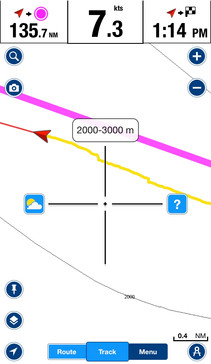


Day 4 (Friday, March 11th): 50.7nm left to go at sunrise! Paul’s earlier joking in the week came true, as he wondered if we could make it to the Bahamas by Happy Hour on Friday. Our average speeds increased to 6.3 knots/hour. As we were making our way through the North Atlantic Ocean towards Great Inagua, we received a VHF call on CH16. At first it was difficult to make out… it sounded as if someone was telling us we were off course by 10 degrees. We immediately checked the horizon as well as our chart plotter, and saw no ships of any kind. I responded to the ‘unknown call sign’ to ask for clarification – and wouldn’t you know it, they were our friends who noticed [on their own chart plotters] that we were almost at Matthewtown, welcoming us! Their boat is named “Off Course” (one of my absolute fav names) and they were asking us to switch to CH10 to chat, as CH16 is for emergencies and hailing only. SV Off Course – a family of three from The Netherlands – were also in Matthewtown and invited us to travel further north with them to the Crooked/Acklins islands that same night. Still in the ‘groove’ of overnight sailing, we gladly agreed. We made it to Matthewtown by 3:30PM – near exactly 72 hours after departing San Juan. It was a whirlwind 2 ½ hours, as an incredibly helpful dockmaster named George helped us to clear customs and immigration, coordinated a delivery of SIM cards, helped us fill up on freshwater, and showed us to the garbages and showers (the latter of which we desperately needed). By 6:00 PM, we were exiting the Matthewtown Harbour and en route to Sweet Sugar Bay in the southern Bight of the Acklins, looking forward to our last consecutive overnight sail of this passage. For the first hour we experienced ‘champagne sailing’ as we enjoyed the full power of winds but none of those North Atlantic waves while tucked behind the leeward protection of Great Inagua Island. Once we cleared the island, however, we were welcomed to a trip of 75nm in open ocean waves and swells (le sigh). But, we were used to it by now! We had a straight shot on a broad reach overnight to reach the archipelago of the Crooked/Acklins and catch up with SV Off Course.
Day 5 (Saturday, March 12th): Our overnight sail a success, we were both feeling relieved that it was the last for a while. By 10:00 AM, we were navigating the ‘Mira por Vos Passage’ in open Atlantic waters. This passage was named such as it roughly translates to “Look out for yourself!” or “Watch out for us!” Smack in the middle of the southern exit from the Cooked Island Passage, coralheads and sandbars abound. The waves also start to compound and build up as they reach the southernmost point of the Acklins islands, making for some big swells.

By noon, we anchored next to SV Off Course in a totally isolated anchorage called Sweet Sugar Bay. Completely protected by all waves and swell, yet still able to enjoy those refreshing tradewinds, we welcomed this flat anchorage with open arms. The change in depth as we approached Sweet Sugar Bay was startling; outside the Bight, depths ranged upwards of 1000m. Within minutes, depths shifted from 1000m, to 100m, to 50m, to 5m. The color change was spectacular, and the blue water is something out of a picture-perfect postcard. And to think, this is only one of literally thousands of places to anchor in the Bahamas. This afternoon we did a clean-up of the cockpit and cabin, and enjoyed a well-deserved nap (while sailing overnight, we each take turns to sleep on the floor of the cockpit and take 4-hour shifts on night watch). Oda and Ono invited us over to their boat for a fresh grilled mahi-mahi dinner this evening; they had much more fishing luck than we did on their passage from the Dominican Republic! Being back with cruising buddies again made the Bahamas immediately feel like a welcome breath of fresh air.


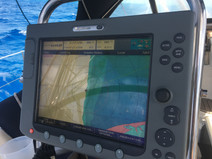



Overall, this passage took us 4 nights and just under 4 full days to travel approx. 554nm. This has been our longest trip so far, and the quickest as well. We are super proud of this accomplishment, and feel that this experience in North Atlantic waters has made us both more competent and confident sailors. While in the Bahamas, we plan to cover roughly another 380nm as we slowly pick our way northwest to the northernmost islands of Grand Bahama and Great Abaco.
Our maximum allowed time for our tourist visa here is 90 days, which, in all likelihood, we will squeeze every last day out of. That takes us to June 11th, which is a great time to start thinking about our next destination… but that’s a blog post for another day! There are over 700 islands and cays in the Bahamas, and while there’s absolutely no way we can visit all of them in 90 days, we’ll darn sure try our hardest. We’ll be sure to update periodically along the way, and you can expect at least one post per month when we find a great WiFi location coupled with a chill day.
Sending lots of love your way! Toni & Paul
P.S. A little anecdote regarding the title. One of our good cruising buddies gives us a jokingly hard time about our pace. It’s a running joke that SV Panta Rhei is notoriously the slowpoke of our ‘cruising group.’ We’re always the last ones to arrive… to an anchorage, a destination, an island, or a new country, you can count on Panta Rhei showing up fashionably late. Our reasons are twofold: one, because we want to soak up every possible moment of our time in the Caribbean. Who knows when we’ll ever (if ever) have an opportunity like this again? We don’t want to rush from place to place; we want to carefully research and take time to purposefully select anchorages and routes. Secondly, we will avoid using our engine at all costs. We have two gorgeous sails that run off of wind energy; no brainer, am I right?! It’s free energy, plus much better for the environment than our big diesel engine. Choosing to sail means that it takes us longer to reach destinations (having to route based on wind), as well as generally moving at a slower speed than we would under engine power. Ifso, facto – we are the slowpokes! HOWEVER – that being said – we are slowpokes NO MORE based on this epic passage!


Comments